A deeper dive into surviving trauma and psycology
In my article My rules of life I describe some of the ethics I have followed for decades, and this article dives deeper into my psychology that have emerged because of surviving a trauma.
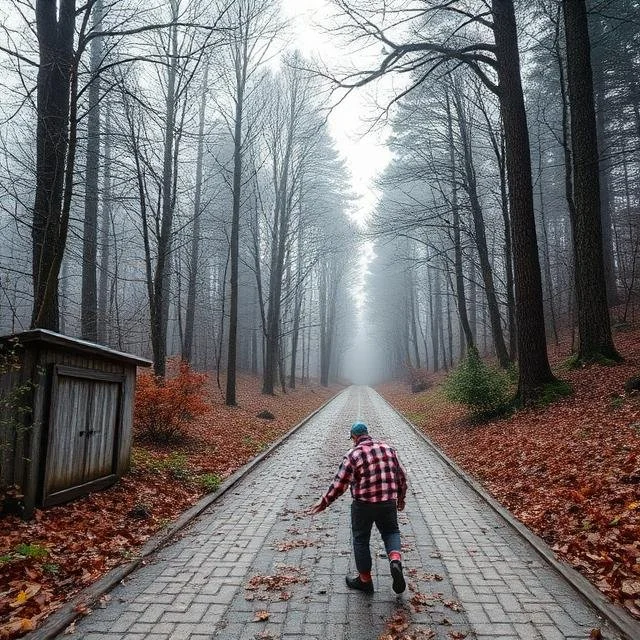 First some backstory: I have been in a traffic accident where the car rolled of the road into the woods. I have been attacked by multiple persons from behind and was kicked in the head several times while I was laying on the ground. Both times I acted calmly and handled the situations.
When I was in the car accident I stayed calm and helped other passengers out of the car. When I was ambushed I stayed calm and fough back enough to make the attackers leave. And when I almost died, I had to be extremely determined to get back to the life I wanted to have. This article is about the determination I had and the mindset I had to wrap myself around to cope with everything that has happened.
In late August 2025 I was hospitalized with a deadly throat infection and spent close to eight months in four different wards at three different hospitals. I spent the last fourt months at Sunnaas hospital where I had to learn to walk and talk again. I had to learn to eat again as well, but I basically did that without medical supervition as the medical staff where afraid I would get the food or drink into my esophagus and lungs. They simply did'nt want to test it. During a weekend leave home, I tested whether I could manage eating soup. While everyone around me was focused on the big goals, like learning to walk and speak again, I were at home thinking, “Let’s see if I can manage a bowl of soup.” When I afterwards told the healthcare staff, they looked quite alarmed. They became starteled and their faces went stiff. For them, it was naturally a serious matter because aspiration, meaning food or liquid entering the airway and lungs, can lead to pneumonia and other serious complications. But from my perspective, it was about testing the limits of what I could do again and taking back a small part of everyday life.
This actually says a lot about my history with trauma and rehabilitation. The major milestones are important, but often it is the small things, like eating a bowl of soup at home, that truly made me feel that life is returning to something normal. I still have various nerve damages that makes eating both challenging and dangerous and it is something I have to be careful about every today for the rest of my life. The nerve damages is also affecting the way I speak, but that has become a part of my life now.
I have written this 12 page document that describes in more detail what I went through. It provides valuable background information to why I am where I am today mentally. Note that most persons have difficulties to cope with what I went through and never finish the document.
For a long time, I had the impression that people who have passed through extraordinary suffering or incidents together share a kind of silent fellowship. I did not truly understand this until I nearly died and spent months moving between hospital rooms, operating theatres, and had long nights where tomorrow seemed uncertain. Before this happened, I imagined that shared experience brought people together. Afterward, I discovered something deeper. Among those who have endured trauma, there exists a language that is rarely spoken and yet instantly understood. You can meet someone whose story bears almost no resemblance to your own and still recognize them. Not because their trauma matches yours, but because they have visited the same landscape of uncertainty, fear, loss, and survival.
When I was on a check-up at Sunnaas in March 2025, I got to know a small group of other patients. One of them was in the ward for patients with severe spinal cord injuries, while the others were in my ward and had severe nerve damages. I was basically the only patient not bound to a wheelchair, but I was used to that from my first stay at Sunnaas. Some were in wheelchairs because of nerve damages and some because of amputations, while others had other challenges. The youngest patient was a 14-year-old, who because of a tumour on her spinal cord, ended up in a wheelchair. The oldest patient was a man just over 60 that had severe nerve damages. He was a musician who used to live of playing guitars. He hoped he could play guitar again one day. A third patient had broken her back in a car accident and was learning to walk again. She had been in an artificial coma for about two months. Another patient I met in recovery was a twenty-three-year-old man who had jumped of a bridge trying to commit suicide. When he landed in the river below, he hit a rock. He survived but broke his back. In his recovery he learned to walk again. The woman who lived two rooms down the hall from my room at Sunnaas lit a tealight candle and got third degree burns over large parts of her body. There were also several Ukrainian soldiers at Sunnaas who had lost limbs because of landmines. We all shared the bond of trauma and this was the first time I interacted with someone who udnerstood trauma.
Not long ago I dated a walking wheelchair user who also had been through traumas. She is problaby the only person I have met outside Sunnaas who understood what I had been through. And it was nice having someone in my life who understood that.
Many people who have never experienced trauma imagine that suffering should leave obvious marks. They expect damages to be visible, depression to be constant, despair to be written plainly across a person's face. Yet trauma often leaves its deepest scars where no eye can see them. I carry a scar across my throat, basically from ear to ear, but that is not the scar that changed me. The more significant wounds are invisible. They exist in memories, in perspectives altered forever, and in the quiet realization that life is not nearly as permanent as we like to pretend. We all imagine we are going to live forever and die of old age, but often that is not the case.
This is often why trauma survivors recognize one another. We know what it means to stand at the edge of something terrible and continue anyway. We know what it feels like to be immersed in suffering with no clear path out, and yet somehow emerge changed but still standing.
When I speak about my experiences with people who have never been through a trauma, I often notice their attention drift. It is not because they are unkind. More often, it is because they have no reference point. They cannot fully imagine what they have never experienced. Trauma in general is difficult to handle or listen to for most people.
Trying to explain trauma to someone who has never faced it can be like trying to explain darkness to someone who has only known daylight. The words are there, but the understanding remains distant. And perhaps that is natural. After all, how could someone understand the shape of a mountain if they have never been through a valley? We live in a culture that teaches us to seek happiness while avoiding suffering, as though the two are separate things. Yet happiness and suffering are like the front and back of the same hand. You cannot have one without the other. Light has meaning because there is darkness. Joy is precious because sorrow exists. Love touches us because loneliness is possible, and many people have felt it. The ancient Chinese described this as Yin and Yang, and they describe this not as two opposing forces but two aspects of the same reality.

We have been taught to eliminate the negative parts of life, but doing so would be like trying to create a landscape with only peaks and no valleys. The valleys are what make the mountains possible. Trauma survivors often understand this in a way that cannot be learned from books, just experience. When you have stared into darkness and survived, you stop expecting life to be perfect. You no longer demand that every moment be comfortable. You discover something many people spend their entire lives trying to avoid: discomfort does not destroy you. In fact, it teaches you, yet in an uncoftoable and brutal way.
People who have survived trauma frequently become remarkably resilient, not because they chose hardship, but because hardship became their teacher. They learned, often against their will, that fear can be felt without obeying it. That pain can exist without defining them. That uncertainty can be endured. What many people spend enormous energy avoiding, trauma survivors have already survived. This does not make them fearless. It makes them familiar with fear. There is a difference.
One of the great misconceptions about trauma is that healing means returning to who you were before. But life does not move backward. You cannot unknow a truth once you have seen it. Healing is not becoming the person you were. Healing is becoming the person who can carry what happened without being crushed by it. That is why so many survivors of trauma develop a quiet strength. Not because they are unbreakable, but because they know they have already endured things they once believed were impossible to survive. And yet there is another paradox. The stronger someone appears, the less help they are often offered. People grow accustomed to their resilience.
At first, everyone notices the weight a surviver carries. But over time, others begin to assume they can handle it. They stop asking if they are alright because strength has become their identity. This is the tragedy many survivors live with. It is like Frodo carrying the Ring. The burden does not become lighter. The people around him simply become used to seeing him carry it. But no one was meant to carry everything alone. Real support is not removing someone's burden. It is standing beside them and saying, "I know I cannot carry this for you, but I will walk with you". That simple act can change everything.
There is a peculiar gift hidden within surviving trauma: an appreciation for the ordinary. When you have been close to losing life, life itself stops feeling ordinary. A conversation becomes precious. A meal becomes precious. A walk outside becomes precious. Seeing someones smile becomes precious. The laughter of people you love becomes precious.
Many people spend their lives waiting for happiness as though it exists somewhere in the future. They tell themselves that once they achieve enough, earn enough, or possess enough, they will finally begin living. But life is not waiting in the future. Life is here. Now. This moment that happens right now is all any of us have ever truly possessed.
Those who died yesterday had plans for this morning. Those who died this morning had plans for tonight. The future is always imagined while the present is the only reality we ever experience. Perhaps trauma strips away the illusion that time is guaranteed. It reminds us that everything is temporary, including ourselves. And strangely, this realization can make life more beautiful rather than less. Because when you understand that a moment will not last forever, you finally begin to pay attention to it. You stop postponing your life. You stop waiting for permission. You stop imagining that happiness exists somewhere else. You realize that the miracle was never hidden in the future at all. It was here, quietly unfolding in the ordinary moments you once overlooked.
To those who carry trauma: your survival is not merely evidence that you endured suffering. It is evidence that there is something within you greater than the suffering itself. You may have lost innocence. You may have lost certainty. You may have lost years. But you are still here. And in that simple fact lies a profound truth; you are not defined by what happened to you. You are the awareness that witnessed it, survived it, and continues to move forward. And perhaps that is the deepest freedom of all.
For the great secret is this: the freedom you seek is not waiting beyond the journey. It has been here all along. You will never be free until you realize that the one who longs to be free is itself part of the dream. And when that is seen, there is nothing left to escape, and nowhere left to arrive. Only peace. Your death will come on an ordinary day in the middle of unfinished plans.
When death finally arrives, I hope it does not come as an enemy, but as a gentle voice saying, "Come now. There is nowhere left to go, nothing left to become." I hope it takes my hand as an old friend might do, smiling at the game that has at last been played to its end. "You need not carry this burden any longer," it says. "It was never yours to carry in the first place." And then it whispers, "Here there is silence. Here there is rest. Here there is no struggle to be yourself, because there is no one left who must struggle."
You have problaby guessed by now I am into Lord of the rings and the work of Tolkien. I see the extended versions of the triology every year at the movie theater and the first time I saw the triology after I was released from the hospitals I reacted to parts of the endring and looked upon it very different than I had done before. Watch the clip below.
Live long and prosper.